As an Amazon Associate I earn from qualifying purchases.

Avoid to content
A nuclear detonation in area “might trigger quick and unexpected loss or deterioration of countless satellites.”
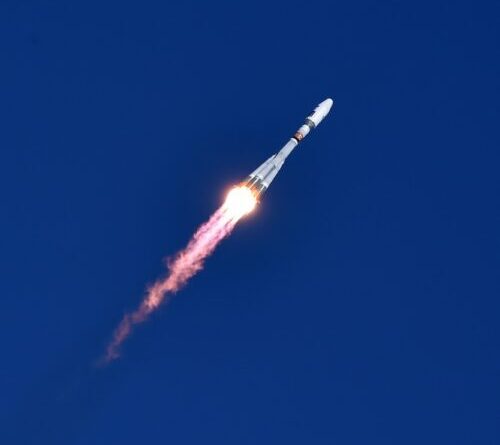
A Soyuz rocket launches from Vostochny Cosmodrome, Russia.
Credit: Kirill Kudryavtsev/AFP by means of Getty Images
Western intelligence authorities fret that Russia might introduce a nuclear-armed satellite into orbit before completion of the year, recommending the nation’s advancement of a satellite-killing weapon of mass damage is advanced than formerly believed, German media reported Monday.
The orbiting nuclear weapon would threaten countless satellites in low-Earth orbit, consisting of military and business interactions networks like Starshield and Starlink. A nuclear-armed satellite would likewise endanger Western military security satellites and human spaceflight platforms like the International Space Station. A nuclear detonation in orbit would be indiscriminate, likewise knocking out Russia’s own spacecraft and Chinese satellites.
United States legislators informed on federal government intelligence initially divulged Russia’s aspiration to release a space-based nuclear weapon in early 2024. At the time, United States authorities stated Russia had actually introduced a test satellite in 2022 to check the impacts of radiation on area hardware and lead the way for a future nuclear-armed craft, however that Russia had actually not yet sent out a nuclear weapon into orbit.
Reporting from 3 German news outlets— public broadcasters NDR and WDR and the Munich-based paper Süddeutsche Zeitung– shows Russia’s launch of a nuclear-armed satellite might be impending. The report states Western intelligence companies, consisting of the German Armed Forces and Federal Intelligence Service, think Russia is preparing to release the weapon in area this year. A number of NATO nations have actually exchanged their findings on the matter.
All set and waiting
The nuclear-armed satellite, designated Sputnik-S, has actually remained in storage in the higher Moscow location for several years, the German report stated. German Space Command thinks the satellite might be introduced as early as December. When in orbit, a nuclear weapon might loiter for months or years, all set for detonation on the command of Russian military forces.
The Kremlin dismissed the report. “Given the variety of qualifiers like ‘presumably’ and ‘perhaps’– not to discuss the reality that the claims are credited to some undefined source– they are barely worth taking seriously,” stated Dmitry Peskov, representative for Russian President Vladimir Putin.
If it goes on, the launch would breach the 1967 Outer Space Treaty, which forbids the implementation of weapons of mass damage in area. Russia is a celebration to the treaty, however the Russian federal government banned a draft UN Security Council resolution in 2024 looking for to declare the restriction on weapons of mass damage in area.
German Chancellor Friedrich Merz did not deal with the timing of the prospective launch when inquired about it at an interview Monday.
“The news that Russia is preparing to equip area with nuclear weapons is not brand-new, however that does not make it any less stunning,” Merz stated. “It reveals the level to which Russia is obviously prepared to intensify the scenario.”
The German report released Monday come a month after the United States armed force’s Defense Intelligence Agency highlighted the hazard of a Russian nuclear-armed satellite.
“Russia is establishing a satellite created to bring a nuclear weapon regardless of its responsibility to adhere to the 1967 Outer Space Treaty,” the DIA stated in a public report on obstacles to security in area. “A space-based ability such as this might trigger fast and unexpected loss or destruction of countless satellites run by nations and business all over the world, in addition to the important interactions, navigation, clinical, meteorological, business, and nationwide security services they offer.
“Beyond its instant impacts, a nuclear detonation in area would likewise leave remaining radiation belts, which might continue for many years and damage satellites that at first were just briefly interrupted,” the DIA stated.
The Pentagon progressively trusts satellites to support military operations. United States forces have actually utilized satellites for navigation, tactical interactions, rocket caution, and security for years. The United States armed force is now releasing satellites to support real-time targeting of rockets, airplane, and land and sea lorries, including area platforms into a larger selection of offending and protective operations.
In September, the Pentagon validated the Space Force has actually put undefined weapons in orbit. There is no global restriction on standard weapons in area.
Leaders in China, which has the second-highest variety of functional satellites, have actually not made any public declarations on Russia’s nuclear-armed satellite program. China would be most affected by a nuclear detonation in orbit after the United States. Russia has relatively less satellites in orbit, and its military costs in the last few years has actually concentrated on battling the war in Ukraine instead of improving its area program.
If Russia does release a nuclear-armed satellite, it would be an escalation of the nation’s already-bellicose habits in orbit. Russia has actually checked what United States authorities state is a kinetic anti-satellite weapon and is now operationalizing the system, according to a leading United States Space Force general. The weapon works by shooting projectiles from one satellite towards another.
Russia has actually likewise introduced military satellites into orbits near the United States federal government’s most advanced Keyhole-class spy satellites. Last month, a Russian satellite approached really near a business radar reconnaissance satellite owned by Finnish business ICEYE. The Russian spacecraft flew within “10s of meters” of the ICEYE satellite, which offers security images to the Ukrainian armed force, before pulling back, a United States authorities stated.
The sort of weapons Russia has actually shown up until now would secure just a little number of satellites. A multiplied constellation like Starlink or the Pentagon’s brand-new air-borne and ground targeting satellites might soak up such an attack. A nuclear detonation would threaten whole networks.
Stephen Clark is an area press reporter at Ars Technica, covering personal area business and the world’s area firms. Stephen blogs about the nexus of innovation, science, policy, and company on and off the world.
68 Comments

Find out more
As an Amazon Associate I earn from qualifying purchases.