As an Amazon Associate I earn from qualifying purchases.

There’s simply something we still do not understand: How much will they cost?
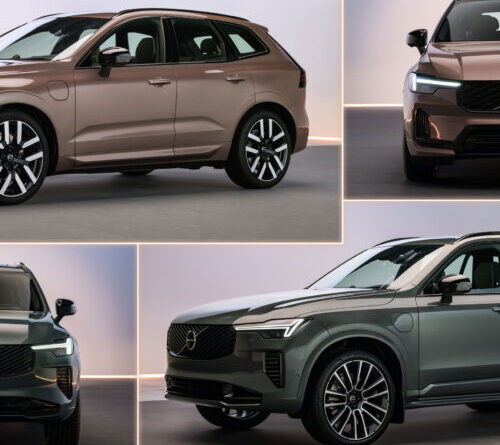
Volvo’s styling tweaks were to make the automobiles look less complex.
Credit: Volvo
Volvo’s styling tweaks were to make the cars and trucks look less complex.
Credit: Volvo
COPENHAGEN, Denmark– If we resided in the world that Volvo’s item organizers anticipated back when the existing XC90 debuted in 2015, both it and the smaller sized however associated XC60(which showed up in 2017)may have been the last of their kind as whatever went electrical. As we understand, the future hasn’t ended up rather like that, specifically in the seriously essential United States market. At the exact same time, Europe and China are electrifying, which looks like an argument versus costs resources on establishing brand new replacements for designs that may not have an eight-year life expectancy in the majority of markets.
Rather, Volvo has actually offered the XC60 and XC90 another lifecycle refresh. The outside styling tweaks are very little; the larger three-row XC90 had actually currently been offered a brand-new appearance last year, and the XC60 now gets a comparable grille and the exact same matrix headlights. Which’s no bad thing– both were, and stay, good-looking shapes that are popular with Volvo’s client base.
Rather, the Swedish car manufacturer’s attention has actually been on bringing the innovation approximately date for design year 2028 requirements. Which suggests a much larger battery for the PHEVs, with enough capability for a number of days of everyday driving for the majority of us before requiring to be charged. There’s likewise brand-new, contemporary infotainment and interiors that are now even better to hang around in than previously.
We initially saw the revamped 2028 XC60 (and learnt more about its technical information and those of the XC90) in September, however with the cars and trucks entering into production now and due to reach the very first United States consumers in the very first quarter of next year, we got the chance to invest some seat time with the upgraded automobiles.
Charge!
Both the midsize XC60 and three-row XC90 utilize the very same PHEV powertrain. Under the hood, there’s a 2.0 L four-cylinder direct-injection fuel engine that produces 247 hp (184 kW) and 226 lb-ft (306 Nm) together with a 70 hp (50 kW), 122 ft-lb (165 Nm) electrical motor, both of which drive the front wheels. At the rear axle there’s a 2nd electrical motor, with an output of 174 hp (130 kW) and 228 lb-ft (309 Nm). Combined output for the hybrid system is 455 hp (339 kW) and 560 lb-ft (759 Nm).
There’s likewise a much larger battery, with a net capability of 37.9 kWh (41.2 kWh gross). If you set the cars and truck’s mode to Pure, which relies entirely on the rear electrical motor for propulsion, that equates to an EPA variety quote of 78 miles (126 km) for the XC60 and 73 miles (116 km) for the bigger, draggier XC90. Which is substantial– when the typical motorist drives less than 30 miles a day, it suggests these PHEVs bring enough electrons for a number of days of tailpipe-emissions-free driving before it requires to be plugged in once again or the engine to fire up.
There are brand-new matrix LED headlights however still with the Thor’s Hammer DRL.
Credit: Volvo Cars
There are brand-new matrix LED headlights however still with the Thor’s Hammer DRL.
Credit: Volvo Cars
When it is time to plug it back in, anticipate it to take about 4 hours with a level 2 battery charger of a minimum of 16 A, or 27 hours if you’re restricted to 120 V. In Hybrid mode, where you get the advantage of both electrical motors and the gas engine, Volvo anticipates a combined effectiveness of 67 mpge in the XC60, and 61 mpge for the XC90.
Even if the gas engine is running and you’re in Hybrid or Power mode( which keeps the engine on all the time), you can drive these Volvos as if they were EVs with one-pedal driving: simply move the transmission from D to B. The Volvos are constantly utilizing their electrical motors to slow the automobile before the friction brakes step in, and in B you get the very same quantity of lift-off regen no matter mode. For city traffic, it’s really reliable. (In Pure, although just the rear motor releases energy, both front and rear motors regen brake.)
In power mode, with all 455 hp released, you can chirp the wheels on a damp day, however these design year 2028 cars and trucks have to do with one big male human much heavier than the outbound design year, both of which were currently quite heavy. Do not anticipate performance-car efficiency. The XC60 is the sweeter to drive on a winding roadway, however both are totally in your home travelling on a highway or sneaking along in a city, which is where automobiles like these invest the large bulk of their time. There’s more roadway invasion into the cabin of the XC60– the bigger Volvo trips on air suspension that does a far better task of filtering that out.
The XC90 is a more cosseting experience.
Credit: Volvo
The XC90 is a more cosseting experience.
Credit: Volvo
A first-drive occasion like this isn’t the very best location to get a great keep reading real-world performance. We normally have to share automobiles with other reporters, and there’s minimal time to drive on roadways that might not be representative– too sinuous, or not adequate traffic. We require to attempt all the various drive modes and see how automobiles react to various inputs. And it’s uncommon you’ll invest the whole day with one cars and truck, completing at the exact same point you began.
That stated, I can’t provide you a certain keep reading variety and performance for these 2 plug-ins. My unscientific quote is that my drive partner and I, in an XC60, drove about 60 km in a mix of city driving and greater speeds on the method to Malmo in Sweden, which is on the other side of a massive bridge, and we utilized about half the battery pack to do so. (Volvo asked us to put the PHEVs in Hold or Charge mode at 50 percent to leave some state of charge for whoever drove the cars and trucks after lunch.)
Hence, there was little charge left in the XC90 when it was my turn to drive the last stint back into Copenhagen. Given that I wasn’t stressed over combined performance, I ran the automobile in Charge mode for about 20 minutes, restoring the battery from an indicated 10 km to an indicated 21 km, then changed to Pure when we reached the city, with about 16 km to go.
The rear lights are brand-new.
Credit: Volvo Cars
The rear lights are brand-new.
Credit: Volvo Cars
Massage time
Volvo currently had a track record for excellent vehicle interiors, and with this refresh, it has actually pressed things forward a little. There’s a brand-new wood surface, brand-new fabrics, and brand-new backlighting. The similarity in between the 2 interiors from the front seat is now rather strong, especially given that the test vehicles Volvo gave Denmark used similar color design inside.
Our last 1.6 km to the hotel took more than 30 minutes to work out thanks to a reception for really essential individuals that obviously happened beside the hotel. The majority of this jam was on one street, with our location in sight, however the aggravation remained in part ameliorated by Volvo’s ace in the hole: its seat massage function.
Great deals of other OEMs provide rubbing front seats, which pump up and deflate the internal air bladder to massage your shoulders, back, and in some cases butt. None massage you with rather the firmness of a Volvo seat. And they have the power to sidetrack you from awful in-car circumstances, as I found when stuck in a V90 Cross Country with Nigel the Cat, whose method of remonstrating with me about his journey to the feline eye doctor was to shriek at high volume up until he lacked breath, at which point he ‘d pant for a couple of minutes, then begin once again. The seat because vehicle is the only factor we both made it home securely. Therefore, in Copenhagen, I set the seat to pulse and did some box breathing.
The updated XC60 interior.
Volvo Cars
As brand-new interior products, you’ll likewise discover a brand-new infotainment screen in both automobiles. Gone are the old 9-inch screens, changed by a brand-new 11.2-inch touchscreen that stands a little happy with the dash instead of recessed into it. Simply this one upgrade alone truly raises both interiors; the old, little screen was revealing its age. A lot of Ars readers will recoil at the news that Gemini has actually changed the previous Google Assistant, however a minimum of the voice-recognition abilities are enhanced. Gemini will still fight with some commands– I asked it to inform me my existing performance, which it stopped working at, however it’s rather proficient at looking things up on the Internet while I drive.
There are likewise some upgraded innovative driver-assistance systems, like a caution if bicyclists approach your opening door, and an upgraded 360-degree parking view. There’s no point-to-point help like Mercedes is presenting, or a hands-free “level 2+” system like Super Cruise; Volvo’s experience with the EX90 might have left it a little gun-shy.
With a battery huge enough for day-to-day driving and a more modern-day interior experience, there’s a lot to like about both the 2029 XC60 and XC90. We still do not understand how much they’ll cost when they go on sale in Q1 next year. With two times the battery capability, it’s affordable to anticipate a small rate increase, however without understanding just how much, it’s difficult to state whether it’s a bargain or not.
Jonathan is the Automotive Editor at Ars Technica. He has a BSc and PhD in Pharmacology. In 2014 he chose to indulge his long-lasting enthusiasm for the cars and truck by leaving the National Human Genome Research Institute and releasing Ars Technica’s automobile protection. He resides in Washington, DC.
62 Comments

Find out more
As an Amazon Associate I earn from qualifying purchases.