As an Amazon Associate I earn from qualifying purchases.

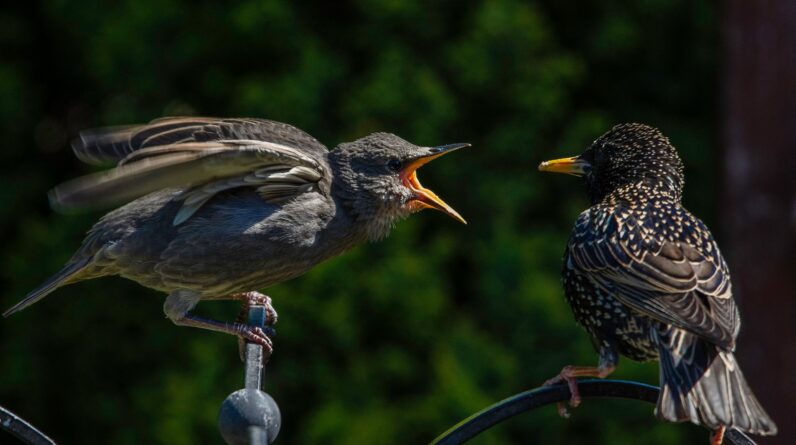
Starlings broadened quickly in the U.S.– going from 100 people to around 200 million in simply 80 years.
(Image credit: Brian Scott/ 500px by means of Getty Images)
In the late 19th century, Eugene Schieffelin, an amateur ornithologist, launched around 100 European starlings(Sturnus vulgarisin New York City’s Central Park. He was chairman of the American Acclimatization Society, a group committed to presenting the plants and animals of Europe to North America. The outcome was a catastrophe. Within years, the birds had actually developed themselves in this brand-new environment and crossed the nation, and by 1970– less than a century after their intro– there were 200 countless them.
This fast growth exposed something impressive about one of the world’s most intrusive bird types: its capability to develop. In this excerpt from “Bird on the Street: The Unnatural History of Starlings” (Columbia University Press, 2026), author and evolutionary biologist Julia M. Zichello states a point in her research study when she was beginning to determine these birds’ amazing versatility: when she got a box of dead starlings.
Julia M. Zichello is the author of “Bird on the Street: The Unnatural History of Starlings” (Columbia University Press, 2026). She is an evolutionary biologist and science author. She teaches at Hunter College, City University of New York, and is a research study partner at the American Museum of Natural History. Her writing has actually appeared in the New York Times, Scientific American, and Connecticut Audubon.
Learn more
As an Amazon Associate I earn from qualifying purchases.